
Last updated November 15, 2026
 Wrought iron
 Wood & steel frame
 Farm & ranch
 Sliding driveway gates
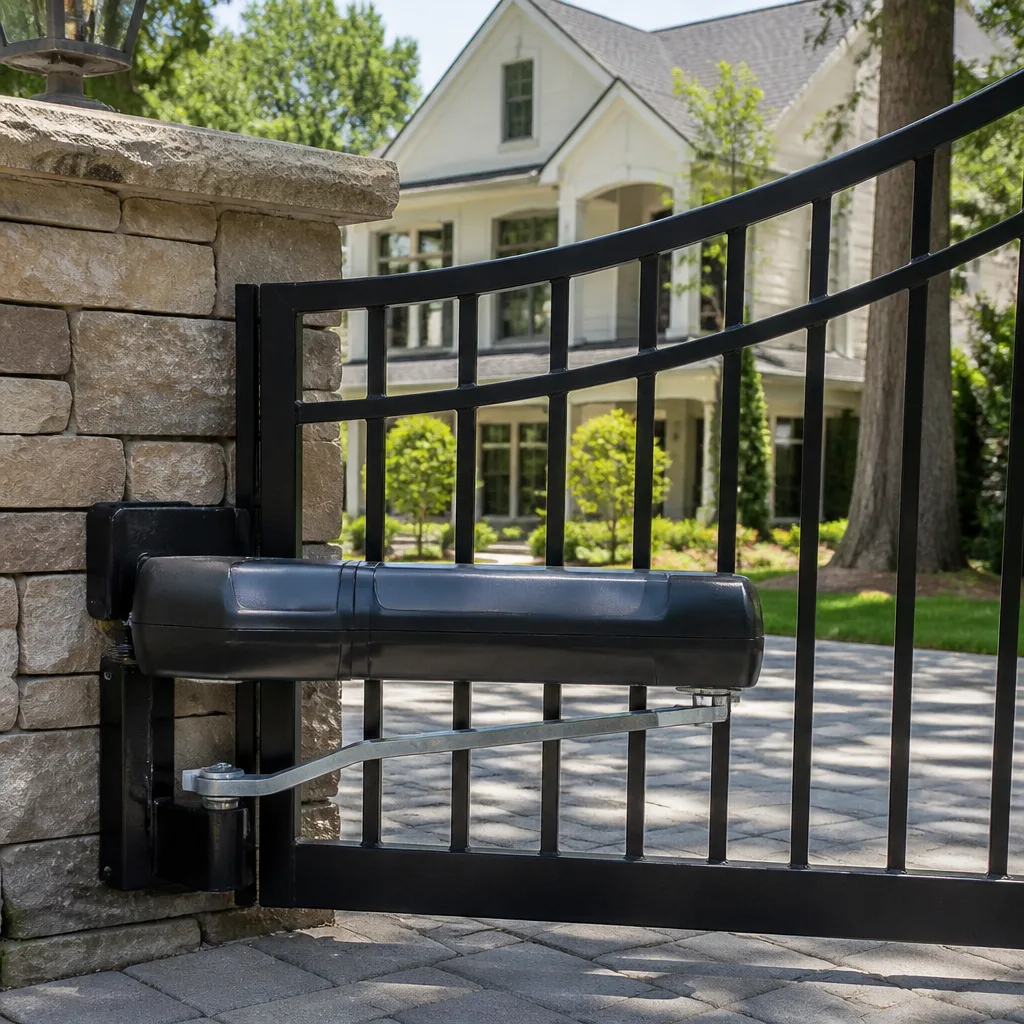 LiftMaster operators
Free on-site gate assessment - hinges, posts, and your LiftMaster or Nice gate operator checked before anything is quoted
The assessment is free and the quote is the invoice.
Get your free estimateGate Repair Troubleshooting in Albany: Common Problems and How to Fix Them
A gate that reverses before it closes isn’t a motor problem. Nine times out of ten it’s an obstruction sensor, a misaligned limit switch, or a hinge that’s drifted out of true. Replacing the motor anyway is the single most expensive diagnostic mistake gate owners make, and it’s one we see repeated across Albany because a failing motor is usually the last thing to blame, not the first. This guide teaches you to read the symptom chain, not just the visible symptom, so you can decide what’s worth checking yourself and what needs a specialist. We cover the five root causes behind nearly every gate failure, how Albany’s freeze-thaw cycle quietly wrecks hinge alignment, which checks are safe to run, and why a control-board reset often hides the real fault instead of curing it.
Quick Answer
Most gate failures trace back to one of five root causes: sensor and safety-device faults, limit-switch or position errors, hinge and hardware misalignment, control-board or power problems, and operator mechanical wear. The symptom you see (a gate that reverses, stalls, or goes dead) rarely identifies which one. In Albany’s climate, freeze-thaw movement in the ground and at the hinges makes alignment faults especially common, and those frequently masquerade as motor failures. Correct diagnosis means following the symptom chain to the subsystem actually at fault before any part gets replaced.
Styles & brands we work with
- Wrought iron
- Wood & steel frame
- Farm & ranch
- Sliding driveway gates
- LiftMaster operators
Table of Contents
- Symptom-to-Cause Mapping: Read the Chain, Not the Symptom
- How Albany’s Freeze-Thaw Cycle Warps Hinge Alignment
- Reverses Before Closing: Sensors, Limits, and What’s Actually Wrong
- Dead Gate, No Response: Power, Board, and Operator Checks
- Partial Travel and Mid-Cycle Stalls: What They Tell You
- Intermittent Failures and the Reset That Isn’t a Fix
- Safe DIY Checks and the Point Where It Becomes a Liability
- When to Call a Professional
Symptom-to-Cause Mapping: Read the Chain, Not the Symptom
The single most useful troubleshooting skill is knowing which subsystem each symptom points to. Gate owners tend to describe the failure they see and assume the cause is the same thing. It almost never is. Here’s the mapping we use on every diagnostic visit, and it’s the same map you can apply before you pick up a tool.
- Reverses before closing or stops and backs off. Points to the safety sensors, the photo-eye or loop detector, or the limit switch. Rarely the motor.
- Dead, no response to the remote or keypad. Points to power supply, a tripped breaker, a failed control board, or a dead battery in the operator or accessory.
- Travels part of the way and stops. Points to a limit-switch setting, a torque or force setting that’s too low, or mechanical binding along the track.
- Works sometimes, fails other times. Points to a loose connection, a failing sensor, temperature-related binding, or a control board on its way out.
- Grinding, straining, or slow movement. Points to hinge wear, track obstruction, or operator gear wear rather than the electronics.
Each symptom is a clue, not a verdict. A gate that reverses before closing has three or four possible causes, and the only way to know which is to test each one in order. In Albany, that order shifts depending on the season: in a hard freeze, alignment and binding jump to the top of the list because the ground and the hardware move more than they do in milder weather. When a swing gate doesn’t reverse and instead simply stalls against an obstruction, that’s a binding chain, not a sensor chain. The distinction matters because the fix is entirely different.
This is exactly where a general handyman drifts off course. They see “gate won’t close” and start with the motor, because the motor is the part they recognize. A gate specialist starts with the sensors and the geometry, because that’s where most failures live. If you’re not sure which chain you’re on, free estimates are the cheapest way to find out: our technicians can walk the full map on-site and tell you what’s actually happening before any part is ordered.
How Albany’s Freeze-Thaw Cycle Warps Hinge Alignment
Albany’s winters are hard on gate hardware, and the culprit isn’t the cold itself. It’s the repeated freeze-thaw cycle. Water gets into soil and around post footings, freezes, expands, and then thaws, and the ground shifts a fraction each time. Do that over a season and a gate post that was plumb in October can be off by a visible margin by March. The gate panel follows the post. The hinges take the strain. The alignment drifts. And what the owner experiences is a gate that drags, binds, or reverses at the same point every cycle.
This is why a gate that “worked fine all summer” starts misbehaving in Albany right around the first hard freeze. It’s also why a motor replacement in that situation is a waste of money: the motor is doing what it’s told, and the gate is fighting a geometry problem. You can often tell alignment from motor torque by watching the gate move by hand (with the operator released, on a manual-release gate). If the panel drags, catches, or won’t swing freely through part of its arc, you’re looking at an alignment or hardware fault. If it swings freely by hand and the operator still struggles, the problem is in the motor, the board, or the settings.
What Freeze-Thaw Alignment Looks Like Versus a Torque Problem
- Alignment: The gate binds at the same point in the cycle every time. The gap between the gate and the post changes visibly. Hinges look worn or offset. The panel scrapes or drags near the bottom.
- Torque problem: The gate moves freely by hand but the operator stalls or reverses under load. Force and torque settings may have drifted. The motor may sound labored even when the gate is unloaded.
- Both: A gate stiffened by winter alignment forces the operator to work harder, which can trip a force setting and produce a reverse symptom. This is the case that fools people into replacing motors.
For Albany homeowners, the fix is rarely the motor. It’s usually re-plumbing the hinge side, adjusting or replacing worn hinges, and resetting the operator’s force and limit values after the gate moves freely again. On commercial slide gates, freeze-thaw can also throw the track out of level, and that shows up as the gate binding on the rollers rather than the hinges. Both are alignment faults. Both get misdiagnosed as operator failures by people who don’t work on gates every day.
Reverses Before Closing: Sensors, Limits, and What’s Actually Wrong
A gate that reverses before it closes is the most common call we get, and it’s the one most often mishandled. The symptom points to the safety circuit or the position feedback, not the motor. Before anyone touches the operator, the safety devices should be checked. Photo-eyes, loop detectors, and safety edges are there to stop the gate if something is in the way, and when they fail, the gate interprets “I can’t see clearly” as “something’s there” and reverses.
- Check the photo-eye alignment. Look for a broken beam. If the lenses are dirty, fogged, or knocked out of line, the gate will reverse every cycle. On older units, sunlight hitting the receiver at a low angle can trigger false reversals at certain times of day.
- Test the safety edge or loop. If the gate has a safety edge along the leading edge, confirm it’s not stuck in the “pressed” position. A loop detector that’s failing can hold the gate in a permanent reverse state.
- Inspect the limit switches. The limit switch tells the operator where the gate is in its travel. If it’s drifted, the operator thinks it’s already at the end of the cycle and reverses early. This is common after alignment changes, which is why limit resets follow hinge work.
- Look at the force and torque settings. If the gate is binding, a force setting that’s set too low will cause a reverse under load. That’s the operator protecting itself from damage, and it’s telling you the gate is stiff.
- Only then look at the motor and board. If sensors, limits, and force settings all check out and the gate still reverses, the board or the motor is suspect. That’s the last stop, not the first.
In our experience, the majority of reverse-before-close calls on Albany gates resolve in the first three steps. The motor is almost never the culprit. Replacing one is the single most expensive diagnostic mistake owners make, and we’ve seen it happen on LiftMaster, Mighty Mule, and DoorKing systems alike. If you’re not comfortable identifying a photo-eye from a limit switch, that’s the point to stop and call. A gate specialist can test the full safety chain in a single visit and tell you exactly which device failed.
Dead Gate, No Response: Power, Board, and Operator Checks
A gate with no response at all is a different chain. It’s a power or control fault, not a safety-device fault. Start at the source and work inward. This is one of the places where a methodical sequence saves money, because replacing a control board when the actual fault is a tripped breaker or a loose low-voltage wire is a common and avoidable mistake.
- Confirm power at the operator. Check the breaker that feeds the gate circuit. If the operator has a visible power indicator, confirm it’s lit. A dead gate with no power at the unit is an electrical issue, not a gate issue.
- Check the battery or battery backup. Many residential operators run on a battery or battery backup, and a failed battery can leave the gate dead even when mains power is fine. If the gate responds briefly after a power cycle and then dies again, the battery is a strong suspect.
- Test the remote and keypad separately. A dead gate that responds to the manual release but not the remote is a control or receiver issue, not a power issue. A dead remote with a blinking keypad points the other way.
- Inspect the control board for visible faults. Look for a tripped fuse, a loose terminal, or a board that’s not showing its status lights. Do not probe the board with anything metal; the low-voltage circuits are easy to short, and the board is a real cost to replace.
- Look at the wiring at the operator and the safety devices. Rodent damage, loose terminations, and freeze-thaw movement at the gate can all break a low-voltage wire. A gate that’s dead after a storm or a cold snap is often a wiring fault.
Albany’s freeze-thaw cycle plays a role here too. Ground movement can pull on wiring, and moisture that gets into an enclosure and freezes can crack a board or a terminal. If the gate was fine last week and dead after a cold snap, the wiring and the enclosures are the first things to check, not the motor. Commercial sites with access-control operators, including DoorKing units, have their own power and loop-detector wiring that needs the same methodical approach.
Partial Travel and Mid-Cycle Stalls: What They Tell You
A gate that travels part of the way and stops is telling you it’s hitting something or it thinks it’s supposed to. There are only a few causes, and they’re distinguishable with a little patience. This is the symptom where the difference between a mechanical fault and a position-setting fault becomes obvious, because a partial-travel stall is almost always one of the two.
- Limit switch set wrong. The operator thinks it’s reached the end of travel and stops. This happens after a hinge adjustment, a post shift, or a board reset that wiped the learned positions. The fix is a limit reset, not a part.
- Mechanical binding. The gate catches on the track, the ground, a roller, or a hinge partway through the cycle. The operator stops to protect itself. By hand, you can feel exactly where it binds.
- Force or torque too low. The operator is set to stop when it meets resistance. If the gate is stiff from freeze-thaw alignment, the setting trips mid-cycle.
- Obstruction. Debris in the track, a dropped branch, ice buildup at the base, or a settled paver in front of a swing gate. You’d be surprised how often this is the whole story.
- Operator wear. A worn gear or a failing motor can stall under load partway through travel. This is the least common cause and the last to check.
The most useful diagnostic tool for a partial-travel stall is your own hand on the gate in manual release. If it moves freely from post to post, the mechanical side is fine and you’re looking at a limit, force, or board setting. If it binds, you’ve found the fault and the operator was never the problem. In Albany, binding at the bottom of a swing gate after a thaw is a classic alignment call. A gate that stalls at the same point every cycle is a mechanical or limit issue. A gate that stalls at different points is usually a force or sensor issue.
For automatic slide gates, a partial-travel stall can also mean the track has shifted out of level. Slide gates are especially vulnerable to ground movement, and a rack that’s slightly out of alignment with the pinion will cause the operator to stall or grind at the same point every time. That’s a mechanical fix, not an operator replacement.
Intermittent Failures and the Reset That Isn’t a Fix
Intermittent failures are the hardest to diagnose and the easiest to misdiagnose. A gate that works most of the time and fails occasionally is telling you something is marginal: a loose connection, a sensor on the edge of failure, a board with a dying component, or a mechanical bind that only trips under certain conditions. The single most dangerous habit in gate troubleshooting is resetting the control board and calling it fixed.
Here’s the trap. A reset clears the fault and relearns the gate’s positions. The gate works fine. Everyone goes away happy. And then, within days, the fault returns. Why? Because the reset doesn’t fix the underlying condition. It just erases the evidence. If the fault was a loose wire, the wire is still loose. If the fault was a failing sensor, the sensor is still failing. If the fault was a binding hinge, the hinge is still binding. A reset masks the fault; it doesn’t cure it.
How to Tell If a Reset Is a Fix or a Delay
- It’s a fix if: the fault had a clear cause (a power surge, a one-time obstruction, a battery that was replaced), the gate cycles correctly multiple times afterward, and it stays correct for weeks.
- It’s a delay if: the gate fails again within days, the failure is intermittent, you don’t know what caused the original fault, or the reset happened after a weather event or a hardware change without any adjustment to the underlying cause.
- Red flags: repeated resets, a gate that fails at the same point in the cycle, a status light that won’t stay steady, or a fault that returns after every cold snap.
The diagnostic flags that predict a repeat failure are specific. If the gate resets but the photo-eye is still out of line, it will reverse again. If the reset clears a board fault but the board has a failing capacitor, it will fail again. If the gate fails after a hard freeze and the hinges are still binding, it will fail again. In Albany, we see this pattern most often in late winter, when a gate gets reset during a thaw and fails again on the next freeze. The gate didn’t lie to you. It was telling you the real fault was still there.
A proper diagnosis on an intermittent fault means testing each subsystem until the marginal component is found, not resetting and hoping. That’s slower than a reset. It’s also the only way to actually fix the problem. Our technicians are trained on the control boards and safety devices that cause most intermittent gate faults, and a single visit with a real diagnostic can save you the repeated resets and the repeat repair bills.
Safe DIY Checks and the Point Where It Becomes a Liability
There are real limits to what you should check yourself, and knowing where the line is protects you. Some checks are safe and useful. Others put you at risk of injury or at risk of a bigger repair bill. Here’s the line, clearly drawn.
Safe to check yourself
- Visual inspection of the gate, the hinges, the track, and the ground for obstructions or obvious damage.
- Operating the gate by hand in manual release to check for binding, dragging, or stiffness.
- Checking the breaker and confirming the operator has power.
- Confirming the remote battery, the keypad, and the wall switch each behave consistently.
- Cleaning the photo-eye lenses and checking that the beam isn’t blocked by debris or vegetation.
- Reading the operator’s status lights or fault code, if the manual is available.
Where it becomes a liability
- Opening the operator housing or the control board enclosure. The boards carry line voltage in places, and a mistake can short a costly board or expose you to a shock. Don’t probe the board.
- Working on the power run, the wiring, or the safety devices while the circuit is live. This is electrical work, and gate wiring is not the place to learn.
- Adjusting heavy panels, slide gate tracks, or hardware on a gate that can move. A gate panel can crush or trap a hand or a limb if it shifts. A slide gate that comes off the track is a serious injury risk.
- Resetting the board without knowing why it faulted. That’s not a repair, it’s a delay, and it can hide a fault that will fail again.
- Working on a gate that’s on a slope or under tension. If you’re not sure how the gate is supported, stop.
The rule of thumb is simple: visual, manual-release, and power checks are yours to do. Anything that involves the board, the wiring, the heavy panels, or the safety devices is a specialist’s job. A gate specialist has the tools and the training to test the full system safely, and a free estimate costs you nothing to get a diagnosis. That’s the value of calling a gate repair specialist rather than a generalist who’ll guess.
Common Mistakes to Avoid
- Replacing the motor first. The motor is the last suspect in most failures, and replacing it before diagnosing the sensors, limits, and alignment wastes the most money. Test the safety chain and the geometry first.
- Resetting the board and calling it fixed. A reset clears the fault, not the cause. If the gate fails again within days, the fault was still there and the reset just delayed the repair.
- Ignoring freeze-thaw alignment. In Albany, a winter-stiff gate that binds is an alignment problem, and treating it as a motor or force problem means the fix won’t hold through the next freeze.
- Letting a general handyman work on the control board. The wiring, loop detectors, and safety sensors are where misdiagnosis happens most, and a specialist’s diagnostic is cheaper than a board replacement or a repeat visit.
- Adjusting force settings to compensate for binding. Turning up the force to push through a stiff gate hides the binding and adds strain to the operator. Fix the binding, then reset the force.
- Skipping the manual-release check. The single most useful diagnostic step is moving the gate by hand. If you skip it, you lose the clearest signal between mechanical and operator faults.
- Assuming a brand swap will fix a symptom. A failing sensor on a LiftMaster or an Elite unit doesn’t become reliable by switching to a different brand. The fault follows the installation, not the label.
See the difference
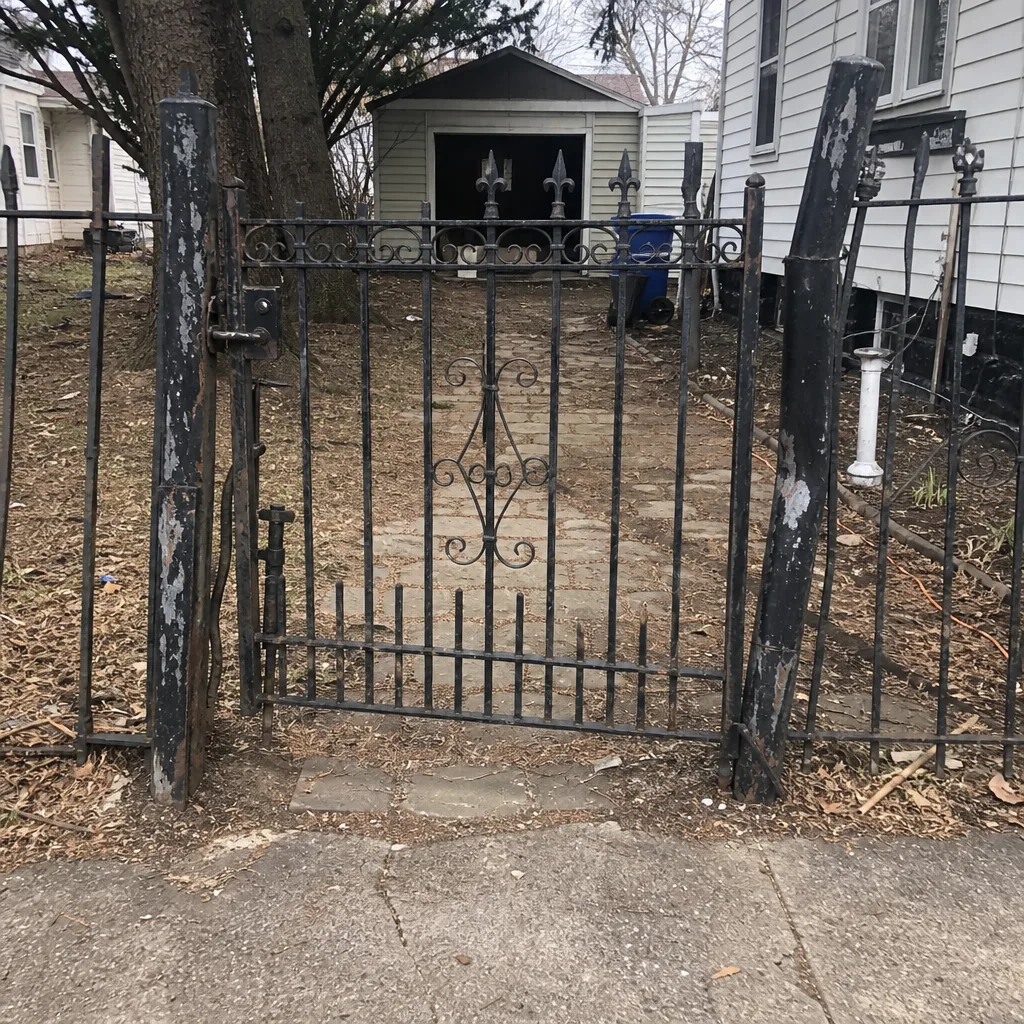 Before
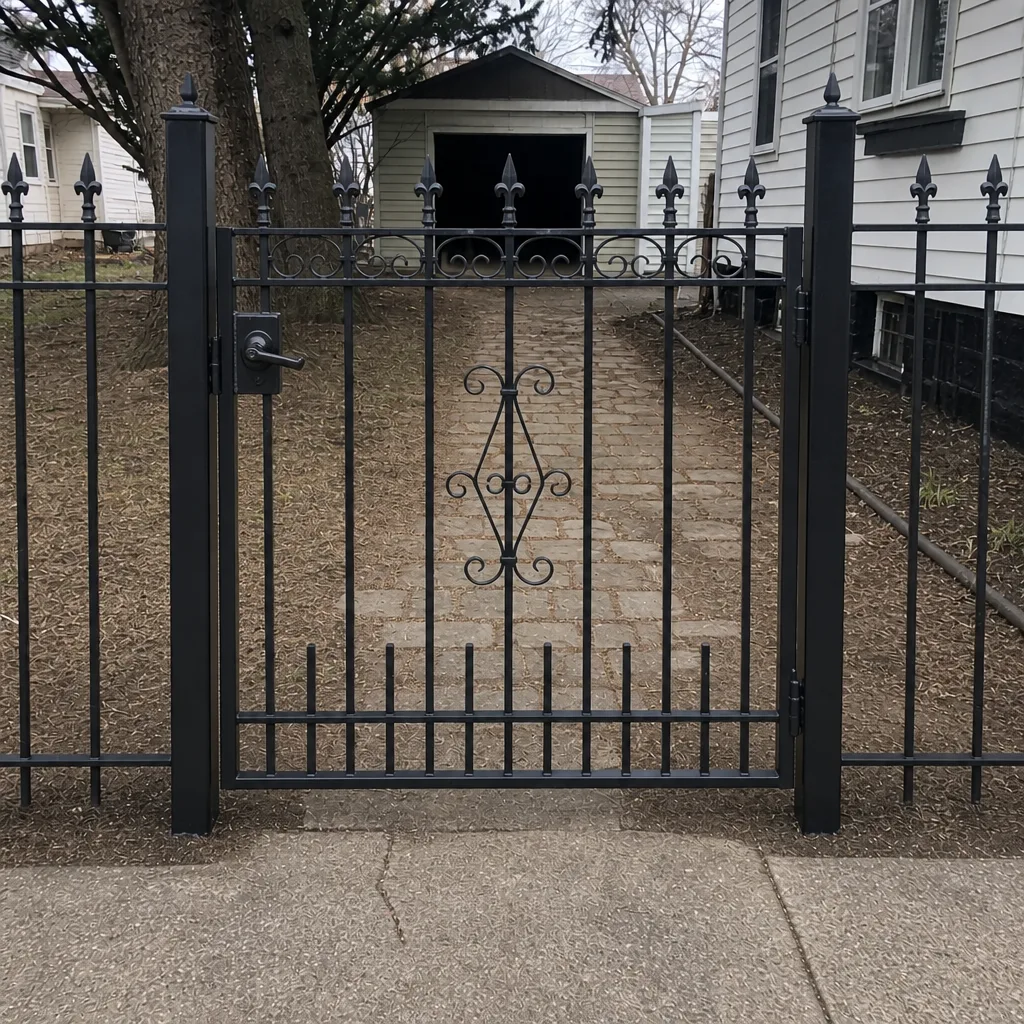 After
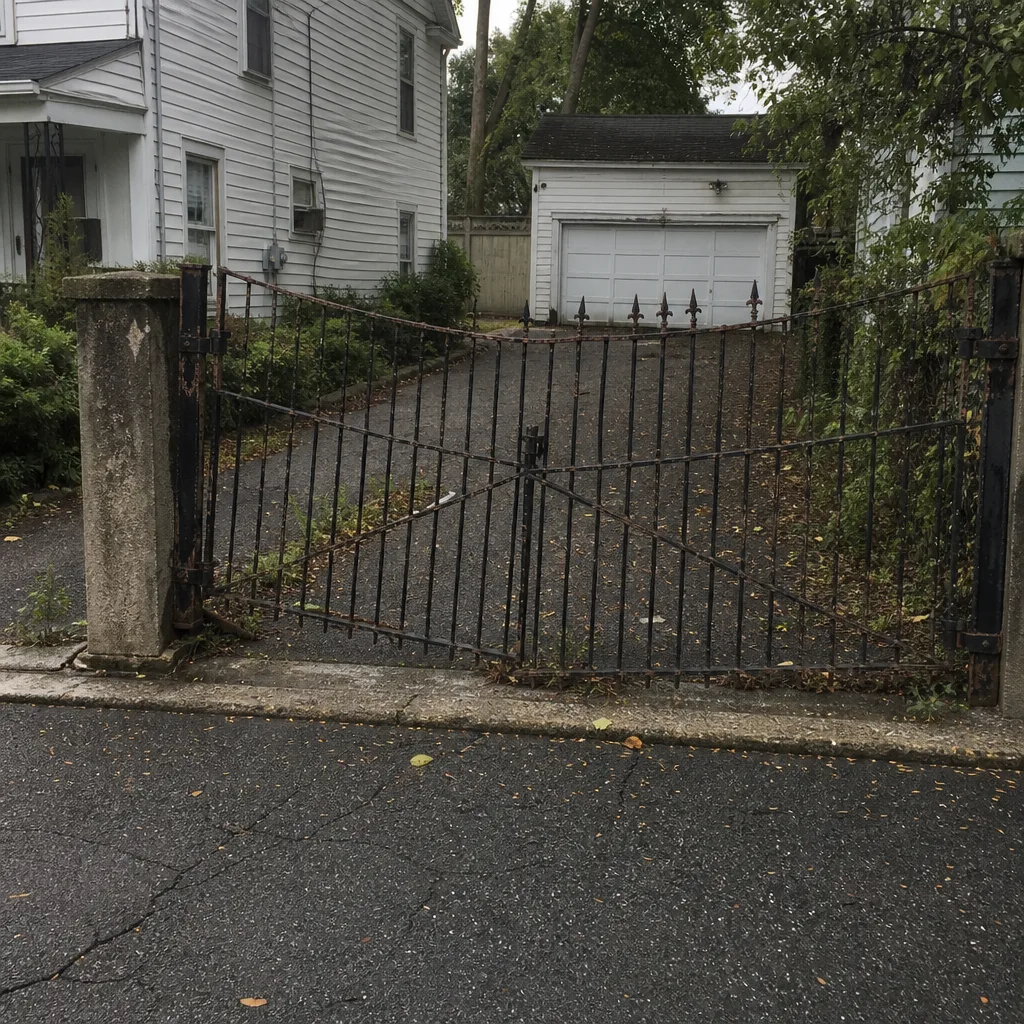 Before
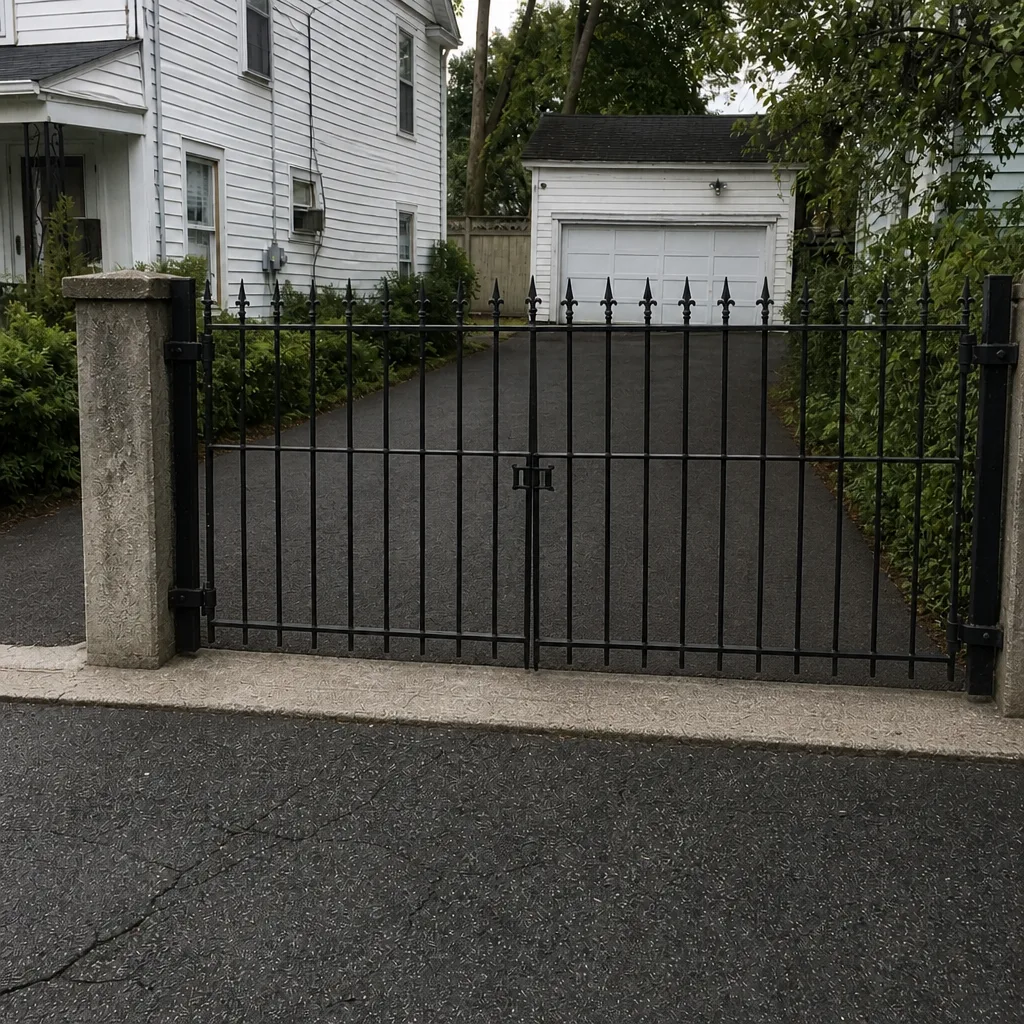 After
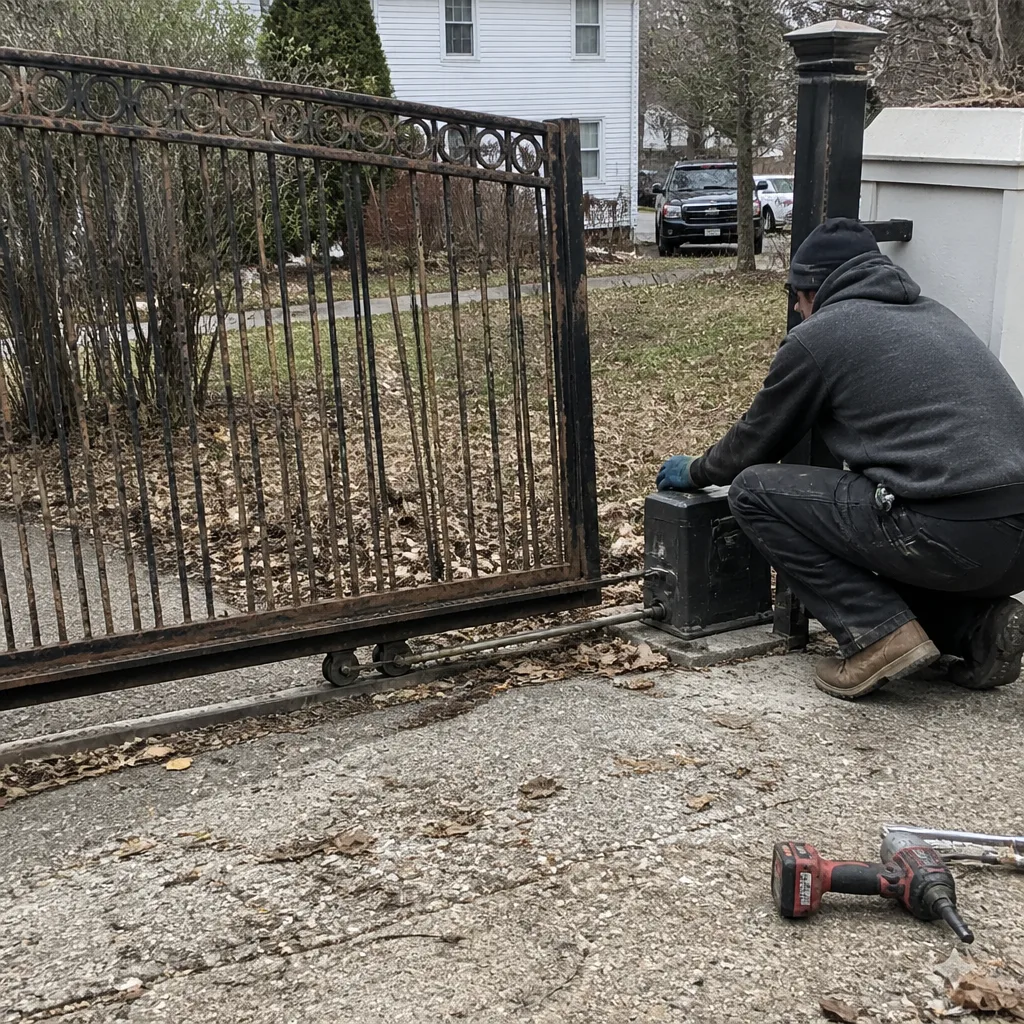 Before
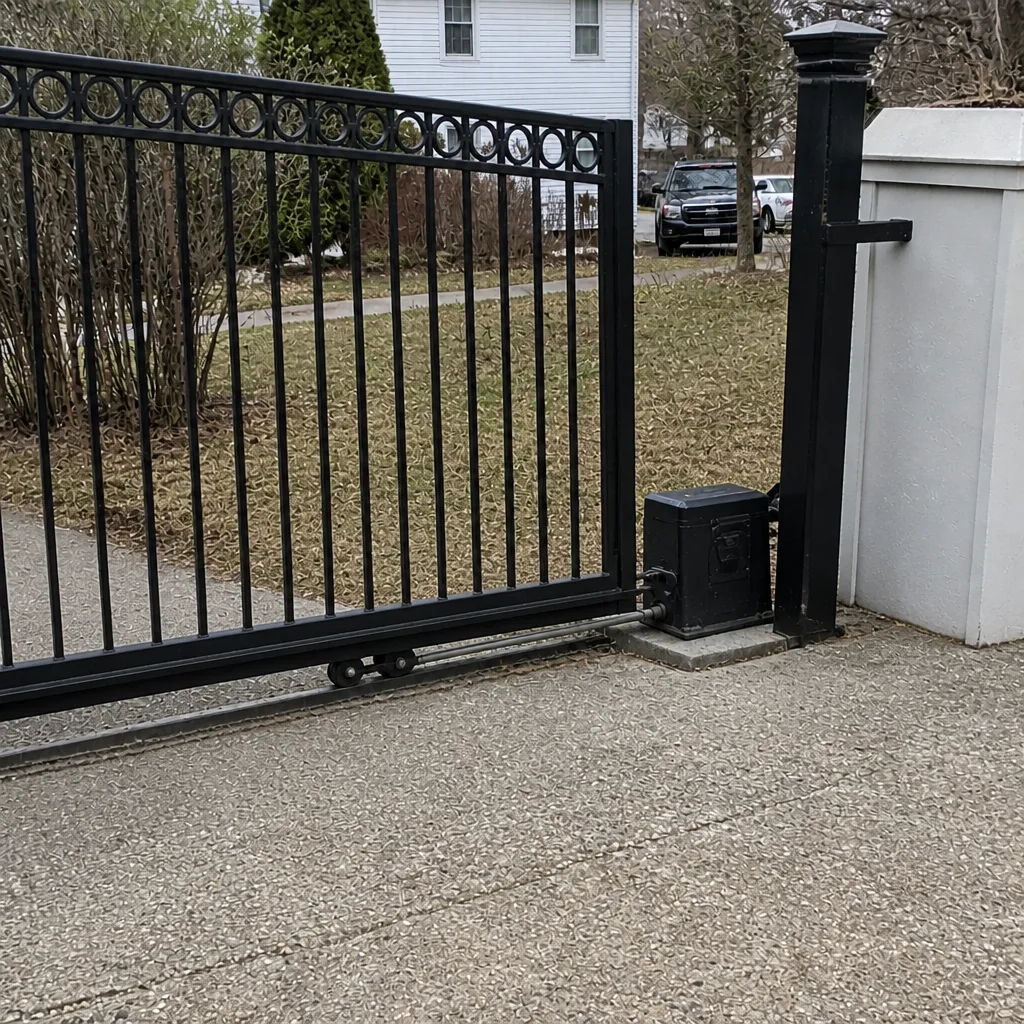 After
When to Call a Professional
Call a professional when the fault touches the control board, the wiring, the safety devices, or the heavy hardware. That means a gate that’s dead with no obvious power issue, a reverse-before-close that survives sensor and limit checks, an intermittent fault that returns after a reset, or a slide gate that’s binding on its track. Call when the gate has come off its track, when a panel or hardware is loose, or when the gate is on a slope and you’re not sure how it’s supported. And call when you’ve been through the safe checks and the symptom still doesn’t match a known cause. Our technicians have up to experience and can diagnose mechanical and electronic faults in a single visit. We specialize in electric gate repair and handle the full scope of gate repair in Albany for residential and commercial properties. For local context on where we work, see our Albany service area. Call (866) 942-6084 for a free estimate.
Frequently Asked Questions
Your gate reverses before closing because of a safety sensor, a limit-switch setting, or a force setting, not a failed motor. The photo-eye or loop detector may be misaligned or blocked, the limit switch may have drifted, or the gate may be binding enough to trip the force setting. Check the sensors and the manual-release first; the motor is almost never the cause.
Winter gate failures in Albany usually trace to the freeze-thaw cycle. Water in the soil and around the post footings freezes and expands, then thaws, and the repeated movement shifts post and hinge alignment. The gate then binds or drags, and the operator trips a force setting or reverses. That’s an alignment problem that shows up as an operator problem, and it needs the hinge side fixed, not the motor replaced.
Resetting the control board is only a real fix if you know what caused the fault and that cause has been corrected. A reset clears the error, it doesn’t repair the underlying condition. If the gate fails again within days, or fails at the same point in the cycle, the reset masked the fault and the real repair is still needed. Repeated resets with no diagnosis are a sign to call a specialist.
We work on the full range of residential and commercial gate operators, including LiftMaster, FAAC, BFT, Linear, Viking, Ghost Controls, DoorKing, Elite, and Mighty Mule. That covers Virtually every operator a homeowner or property manager is likely to own. Brand-agnostic repair means we fix the gate you already have rather than pushing a replacement.
Yes. A gate that works after a reset can still fail again within days if the reset only cleared the error without fixing the cause. The warning signs are a fault that returns after a cold snap, a gate that fails at the same point every cycle, or a status light that won’t stay steady. Those are the diagnostic flags that predict a repeat failure.
Estimates are free, and the price for any repair is set per job by the written estimate before work starts. We diagnose the mechanical and electronic faults in a single visit, so you get a clear answer on what’s wrong and what the fix involves. Call (866) 942-6084. We answer 24/7. Fast dispatch from 7am to 7pm, Sunday through Friday.
The Bottom Line
Most gate failures come down to one of five root causes, and the symptom you see rarely names the cause. Read the chain: reverses point to sensors and limits, no-response points to power and board, partial travel points to limits and binding, and intermittent faults point to something marginal that a reset will only hide. In Albany, add freeze-thaw to the top of that list, because winter ground movement warps hinge alignment and dresses up as a motor fault. Check the safe things yourself (visual, manual release, power), then call a specialist for anything that touches the board, the wiring, or the heavy hardware. A correct diagnosis in one visit costs less than a reconditioned motor and a repeat repair.
Call (866) 942-6084. We answer 24/7. Fast dispatch from 7am to 7pm, Sunday through Friday. Estimates are free, and the written estimate sets the price before any work starts.
Written by the team at Gate Repair Albany.