
Last updated November 15, 2026
 Wrought iron
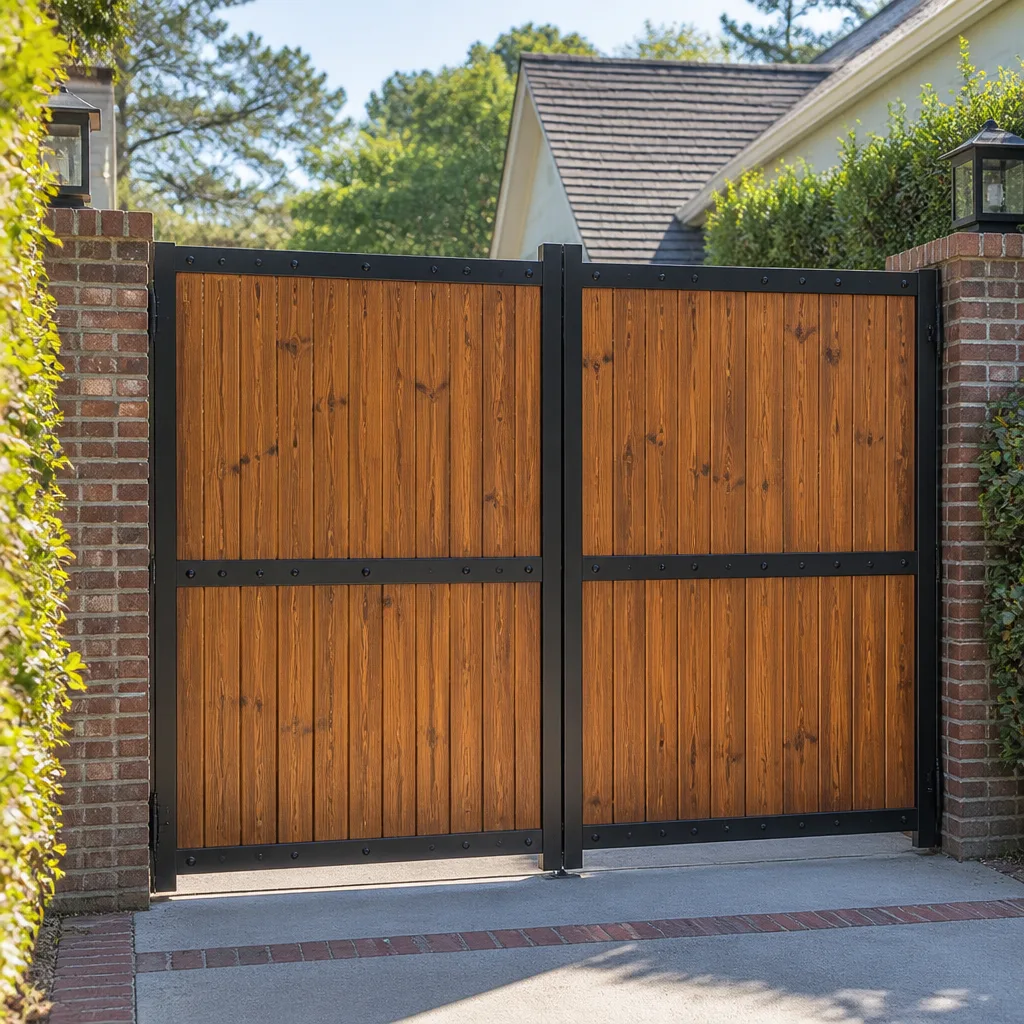 Wood & steel frame
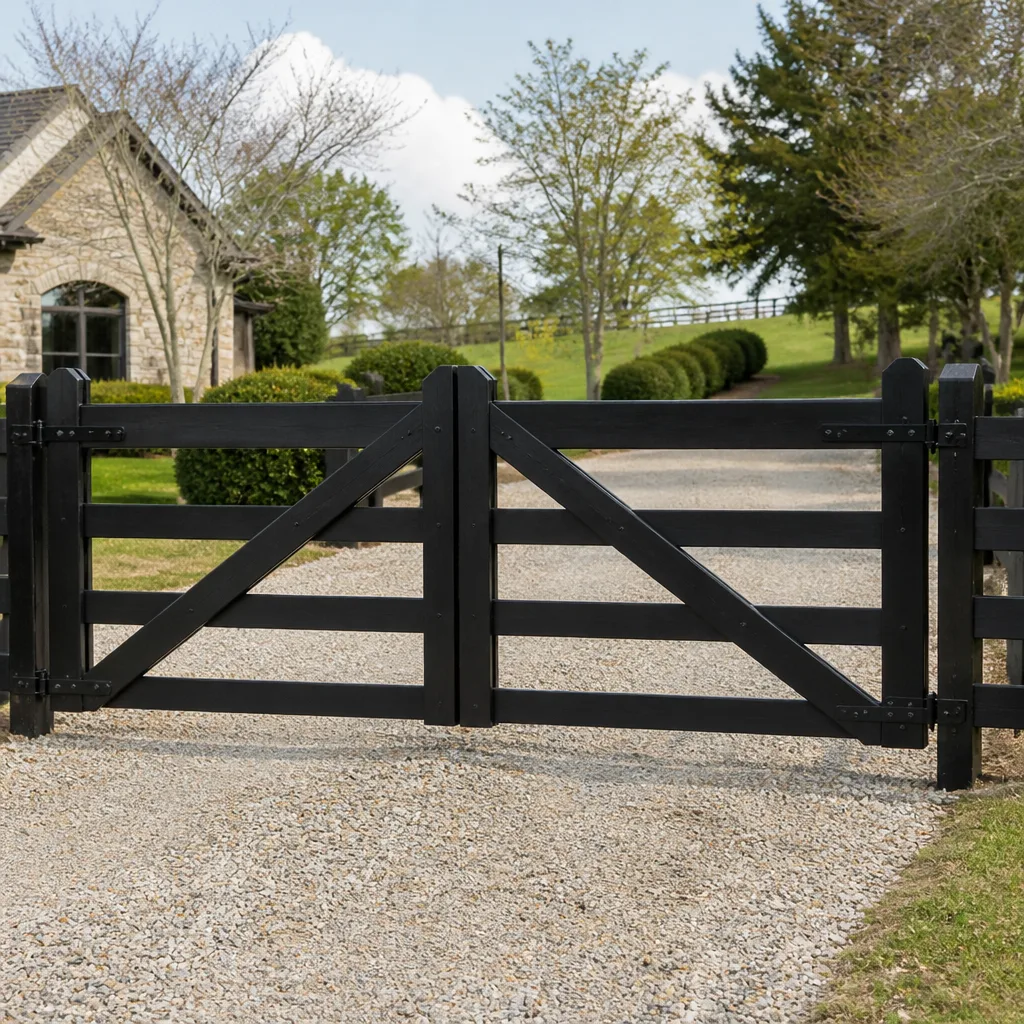 Farm & ranch
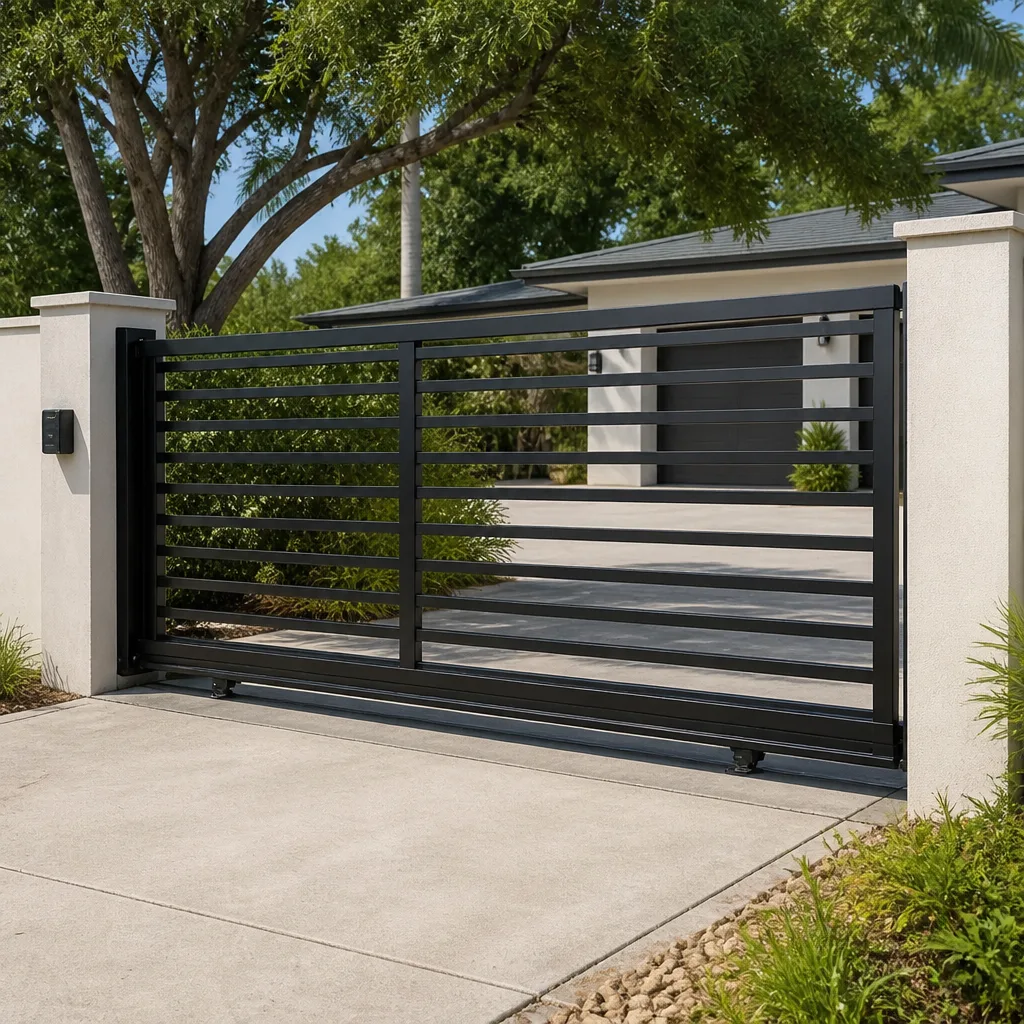 Sliding driveway gates
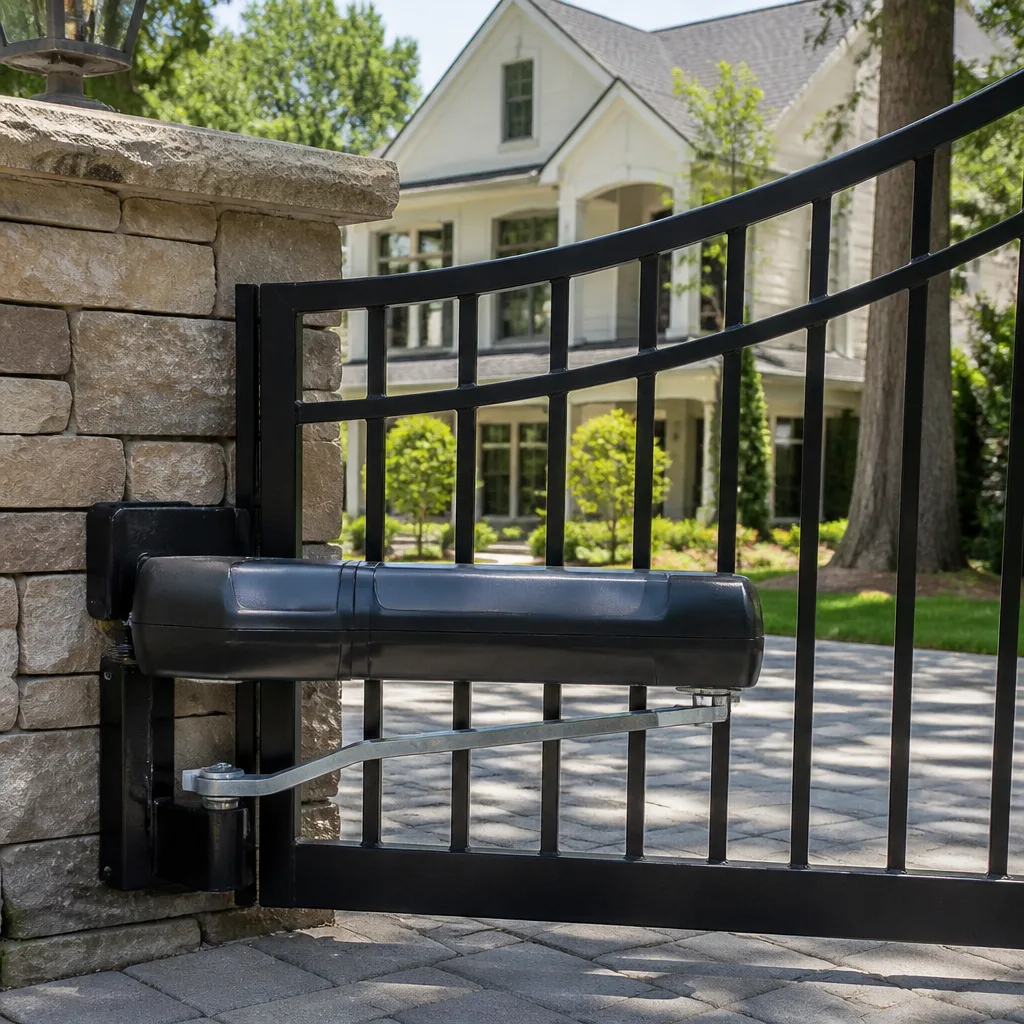 LiftMaster operators
Free on-site gate assessment - hinges, posts, and your LiftMaster or Nice gate operator checked before anything is quoted
The assessment is free and the quote is the invoice.
Get your free estimateDIY vs Professional Gate Repair: The Albany Homeowner’s Decision Guide
Most homeowners frame gate repair as a skill question: am I handy enough to fix this myself? That’s the wrong question. A gate is a stack of very different systems bolted together, and the part you’re touching decides whether the stakes are “swap a battery” or “a moving barrier that can injure someone.” Replacing a remote battery is a five-minute DIY job with no consequences. Adjusting the force settings on an automatic operator is not, and getting it wrong during Albany’s freeze season leaves you with a gate that either won’t open in the cold or can’t stop when something is in its path. This guide sorts gate repairs into three honest buckets by consequence, not difficulty, so you can decide which jobs are yours and which belong to a technician.
Quick Answer
Most gate repairs are professional-only work, and the split comes down to consequences rather than difficulty. Tasks that only touch low-voltage controls, batteries, remotes, and visual checks are safe to do yourself. Anything involving the operator’s force settings, the wiring, the safety sensors, a heavy gate panel, or a slide gate off its track belongs to a trained professional, especially when the wrong fix carries liability for what the gate does to a person or a vehicle. In our experience, the DIY jobs that look complete often create a secondary failure within months.
Styles & brands we work with
- Wrought iron
- Wood & steel frame
- Farm & ranch
- Sliding driveway gates
- LiftMaster operators
Table of Contents
- The Three Categories of Gate Repair: Safe DIY, DIY With Risk, and Professional-Only
- Automatic Gate Operators, UL 325, and Why Liability Matters
- The DIY Tasks That Are Genuinely Within Reach
- The Tools a Competent DIYer Actually Needs
- Five Common DIY Gate Repairs That Create a Second Failure
- Freeze Season and Albany’s Gate Problems
- Will a Save-Money-Now Repair Cost You Later?
- How to Tell Whether You’re Looking at a Mechanical or an Electronic Fault
The Three Categories of Gate Repair: Safe DIY, DIY With Risk, and Professional-Only
Sort every gate task by what happens if it goes wrong, not by how hard it is. A loose hinge screw is easy and low-consequence. Replacing a control board is also fairly easy once you have the part, but a miswired board can fail to reverse the gate, which is a serious safety problem. The task list below is built on consequence first.
Safe DIY: low voltage, no moving parts, no structural load
- Replacing remote and keypad batteries
- Reprogramming a handheld remote to an existing receiver
- Cleaning the photo-eye lenses and clearing spider webs or leaf litter from their line of sight
- Visual inspections: look for loose bolts, worn hinges, sagging gate panels, and frayed wires
- Clearing debris from the gate’s swing path or slide track
DIY With Risk: possible but with real consequences if done wrong
- Adjusting limit switches (the gate can over-travel and stress the operator or the gate frame)
- Replacing a gate arm on a swing operator (mismeasured arms put strain on the operator gearbox)
- Lubricating hinges and pivot points (too much grease on outdoor hardware attracts grit)
- Tightening gate-frame hardware (over-tightening can strip a weld or a bolt)
Professional-Only: high voltage, moving barriers, safety compliance
- Adjusting or reprogramming force, speed, and reversal settings on the operator
- Any work on line-voltage wiring, the operator’s transformer, or the power run to the gate
- Replacing or repositioning safety sensors, photo-eyes, and loop detectors
- Diagnosing a control board fault
- Lifting a heavy gate panel back onto its hinges, or resetting a slide gate that has come off its track
If your task appears on the third list, stop and arrange a call. Our gate repair team works only on gates, and a single visit is usually enough to diagnose both the mechanical and the electronic side of a failure.
Automatic Gate Operators, UL 325, and Why Liability Matters
UL 325 is the safety standard that covers automatic gate operators, and it requires that the gate have entrapment protection: features that stop or reverse a gate if something or someone is in its path. Photo-eyes, safety edges, and loop detectors are the physical pieces that make this work. When the operator’s force settings, the sensor placement, or the safety logic is changed incorrectly, the gate can move with enough force to injure someone and fail to stop in time. That’s a liability problem for whoever owns the gate.
This is the point that separates gates from most other home systems. A misadjusted sprinkler control board wastes water. A misadjusted gate operator can hurt a child. In practice, insurance underwriters and, in some cases, the property’s own risk review expect an automatic gate to be maintained to the safety standard it was installed under. If a gate is altered by a DIYer and later causes a problem, the alteration is a question mark in the record.
You don’t need to read UL 325 yourself to make a good decision. You do need to know which tasks touch it. Force, speed, and reversal settings, sensor placement, and any change to how the operator decides to stop the gate all sit inside the standard. Those belong to a trained technician. At Gate Repair Albany, electric gate repair work covers exactly this territory: control boards, photo-eye wiring, loop detectors, and safety logic, including on operators from DoorKing, Elite, and other commercial and residential platforms.
The DIY Tasks That Are Genuinely Within Reach
Plenty of the annoyance calls on a gate aren’t really “gate failures” at all. They’re remote issues, dead batteries, or a photo-eye blocked by last night’s leaf fall. These are worth doing yourself, because they cost nothing and they don’t create downstream risk.
1. The remote isn’t working
Before you assume the operator failed, test two things: the wall button (or keypad, if you have one) and the remote’s battery. If the wall button opens the gate but the remote doesn’t, the problem is in the remote or the receiver channel, not the gate. Start with the battery and then reprogram if needed.
2. The gate opens, then closes again immediately
The photo-eye is usually the culprit. Look for a cobweb, a fallen leaf, or condensation on the lens. Wipe both lenses and test again. This alone resolves a surprising share of “my gate is broken” calls in any given week.
3. One gate leaf drags on the ground
Older swing gates often sag at the hinge end. If the gate is scraping but still opens, this is worth flagging to a technician but not an emergency. Don’t try to lift the panel off its hinges by yourself; a full-size gate panel is heavy enough to cause injury and is properly set with the operator disconnected and the gate supported.
4. The gate is noisy
Hinges and pivot points take a small amount of outdoor-rated lubricant. Over-lubricating is a mistake in Albany, because grit sticks to excess grease and speeds up wear on the hinge pins. A light application at the start of the season is enough.
5. The gate “beeps” or flashes but doesn’t move
Some operators flash an error code when a sensor is triggered or a limit is hit. Note the pattern and the model, then call. In our experience, this is one of the cheapest calls to make, because the operator is telling you what’s wrong if you know how to read it. On LiftMaster, FAAC, BFT, Viking, Ghost Controls, DoorKing, Elite, Mighty Mule, and Linear systems, the diagnostic codes vary but the principle doesn’t.
The Tools a Competent DIYer Actually Needs
You don’t need a garage full of specialty equipment to handle the safe-DIY list. You do need the right small set, and you need to know what each tool is for, because the wrong tool on a gate is how bolts strip and hinges bend.
- Adjustable wrench and a socket set. For tightening gate-frame bolts and hinge hardware. Use the socket set on any bolt that’s been in place for a while; an adjustable wrench can round a corroded head.
- Phillips and flathead screwdrivers, plus a small precision set. For opening remote and keypad battery compartments and for the receiver’s programming buttons.
- Multimeter (basic). For checking whether a photo-eye is getting power. If the eye isn’t getting voltage, that’s not a DIY problem, but the meter tells you when to stop.
- Outdoor-rated grease or hinge lubricant. For hinge pins and pivot points. Use it lightly and wipe off excess.
- A soft cloth and a small brush. For cleaning photo-eye lenses and clearing the gate’s track or swing path. This is the tool that prevents most repeat visits.
- Owner’s manual for your operator. Most operators include a code table and a remote-programming sequence in the manual. Look up the model on the plate inside the operator housing and keep the manual on your phone. It’s the single most useful tool in the list.
What’s not on the list: wire strippers for anything above low voltage, gate-arm pin presses, and control-board replacement tools. If those are what the job calls for, it’s beyond the safe-DIY set. Just pick up the phone. Call (866) 942-6084. We answer 24/7. Fast dispatch from 7am to 7pm, Sunday through Friday.
Five Common DIY Gate Repairs That Create a Second Failure
The frustrating part of a DIY job is when it “works” the first day and fails six months later. In our experience, the following five are the most common cases where a fix looks complete but a second failure is already forming.
1. Replacing the gate arm without re-checking stroke alignment
A new swing-gate arm looks like a bolt-on job, but the arm’s geometry has to match the operator’s stroke and the gate’s opening angle. Get it slightly off and the operator’s gearbox works harder than it should. The gate opens fine at first and then the operator starts stalling or the arm fails early.
2. Silencing a beeping photo-eye without replacing it
Taping over a blinking photo-eye lens or unplugging it to stop the beep defeats the safety system entirely. The gate now moves without a reversal check, and the operator may develop intermittent stalls because its safety logic can’t complete an expected handshake. This is a professional-only fix, not a workaround.
3. Tightening a slide gate’s track bolts without setting the gate wheel height
Bolting a slide gate back onto its track without lifting the wheels to proper height puts the gate’s full weight onto the track and the wheels’ bearings. It rolls for a while; then a wheel flattens or the track bends, and both are expensive replacements.
4. Replacing a control board before diagnosing the actual fault
A “dead” operator is more often a failed sensor, a blown fuse, or a broken wire than a failed board. Replacing the board on a hunch is expensive and doesn’t fix the underlying fault. If the board is the culprit, the correct diagnosis includes why it failed, which matters for the next one. This is the kind of task a gate-only specialist handles on the first visit.
5. Straightening a bent gate panel by force
A warped gate frame looks like it will bend back into shape, but gate steel is under tension across the frame. Bending it creates a hairline crack that propagates with every opening cycle, and the failure goes from “cosmetic” to “structural” within months. Panels that are bent need to be evaluated, not forced.
Freeze Season and Albany’s Gate Problems
Albany’s climate matters for gate repair in specific ways. The freeze-thaw cycles across late fall and early spring work on gate hardware constantly: any moisture trapped in a hinge, a weld, or the ground at a post’s footing expands, contracts, and works the joint loose. Gates that operate fine in summer can start dragging, sticking, or missing limit points once the first hard freeze hits.
The operator adds its own problem. Automatic gate operators rely on force settings to know how hard to push, and those settings are dialed in when the gate is free-moving. If the gate binds in cold weather (frozen leaves in the track, stiff hinges, an ice-jammed wheel), the operator has to work harder to move it. Two things can happen. One, the operator stalls and the gate looks “broken.” Two, someone turns up the force to get the gate moving again, and now the operator will push harder at all times, including when something is in its path. Neither is a good outcome.
The correct response to a gate that starts dragging in the cold is a mechanical fix: free the binding, replace the worn hinge, clear the track. Adjusting the force to compensate treats a symptom and creates a bigger safety problem. If you live in a part of the Albany area where the gate is exposed to wind and drifting snow, or one where the gate drags the ground every winter, have a technician look at the gate’s clearance and the operator’s force settings before the next season starts.
Will a Save-Money-Now Repair Cost You Later?
The “save money now” decision is a reasonable one to make, provided you understand the parts most sensitive to shortcuts. A few of a gate’s components are much more sensitive to a wrong fix than others.
High sensitivity to shortcut repairs
- The operator gearbox. Every small misalignment in the arm geometry, hinge, or gate panel load shows up here first. Gearbox repairs are the most expensive routine repair on a gate.
- The gate’s structural frame. A bent panel that gets forced back creates a crack that grows. A gate frame is more expensive to fix than most homeowners expect.
- Control boards and safety sensors. A miswired sensor or a shorted cable can damage the operator’s board or, at minimum, its diagnostic logic.
- Posts and footings. Gates that are dragged or bumped repeatedly move slightly at the footing, which affects the swing or slide alignment.
Lower sensitivity to shortcut repairs
- Hinge lubrication and debris clearing
- Photo-eye cleaning
- Remote and keypad battery replacement
- Bolts and screw-level tightening on non-load-bearing points
The pattern is clear: anything the operator or the gate frame “feels” is expensive to shortcut, and anything you can see and reach is fine. If a save-money-now repair touches the operator, the gate frame, or the wiring, plan for the possibility of a second repair later. If you’re not sure where a task sits, our team at Gate Repair Albany can tell you in a single call whether it’s a DIY job or a technician job, and we’ll give you a free estimate either way if it turns out to be the latter.
How to Tell Whether You’re Looking at a Mechanical or an Electronic Fault
One useful habit to build: separate the question “does the gate move mechanically?” from “does the operator command it to move?” Two quick checks tell you which half of the problem you’re facing.
Check 1: Does the operator beep, flash, or click when commanded?
If the operator responds to a command with any sound, light, or motion at all, the electronics are at least partially alive. The fault is likely in the mechanical side (binding, a stuck hinge, a bent arm) or in a sensor the operator is waiting on.
Check 2: Does the gate move freely with the operator disconnected?
Most operators have a manual release (usually a key or a lever). With the gate in manual mode, swing or slide the gate by hand. If it moves easily, the mechanical side is fine and the fault is in the electronics. If it drags, binds, or resists, the mechanical problem is upstream of any electronic fault.
If those two checks don’t give you a clean answer, that’s the point to stop and call. The operator’s diagnostic log tells a technician much more than it tells a homeowner, especially on Viking or DoorKing units that report specific error codes. When it comes to diagnosing a fault, our technicians live in the control board. A single visit resolves most cases, even when the fault is genuinely both mechanical and electronic. Call (866) 942-6084 for a free estimate.
Common Mistakes to Avoid
- Turning up the force to get the gate moving in cold weather. This fixes the symptom and creates a safety problem at all temperatures. Free the mechanical bind instead.
- Disabling or covering a photo-eye to stop the beeping. The gate now operates without a reverse check, and the operator’s safety logic may develop intermittent stalls.
- Replacing the operator’s board before diagnosing the actual fault. Boards fail far less often than sensors and wiring do. Guessing is the most expensive route.
- Pushing a slide gate back onto its track without lifting the wheels. The track and the wheel bearings take the load, and both fail early.
- Greasing a squeaky hinge with too much lubricant. In Albany’s grit and road-salt season, an over-greased hinge becomes a paste trap and wears faster than a dry one.
- Forcing a bent gate panel back into shape. The bend looks cosmetic, but gate steel is under tension and a forced repair can create a crack that runs across the frame.
- Assuming the remote is broken when the wall button works. Test the wall button first. If it opens the gate, the fault is in the remote or the receiver, and the operator is fine.
See the difference
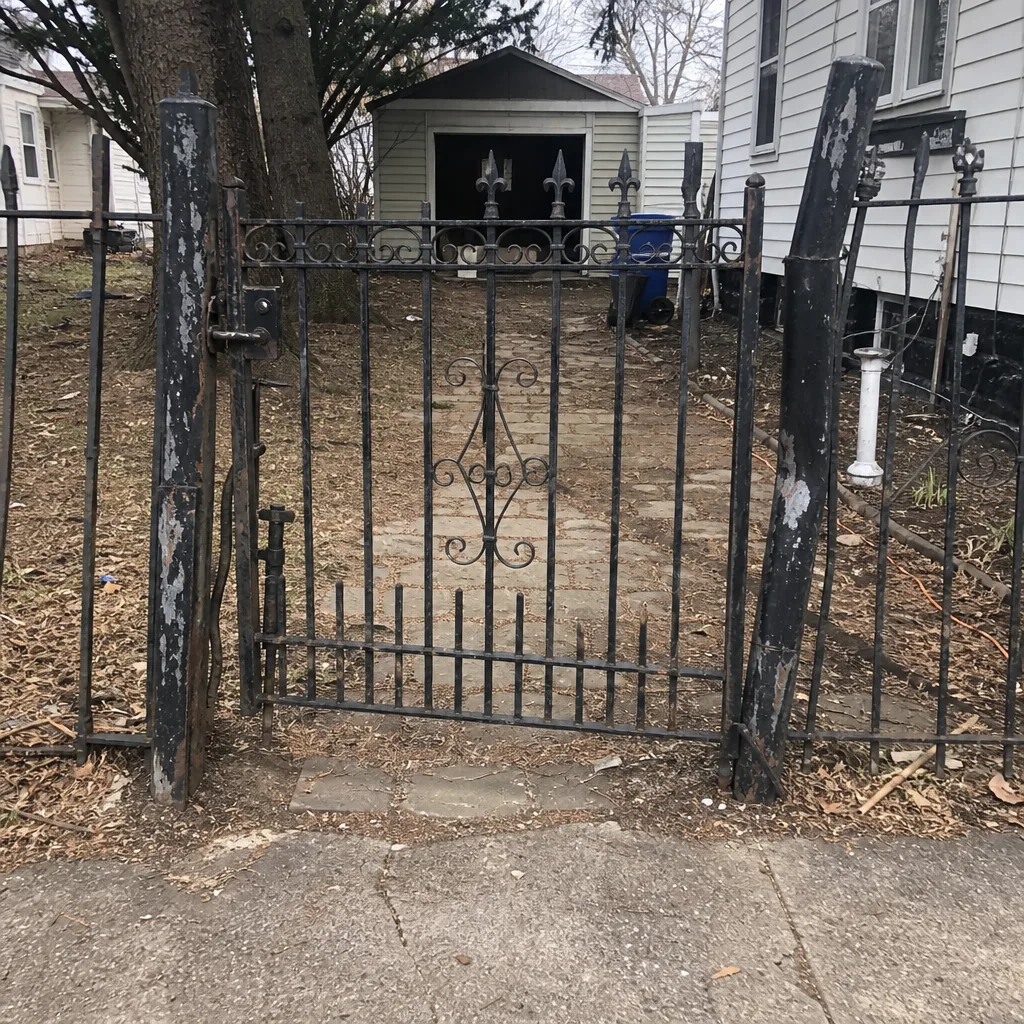 Before
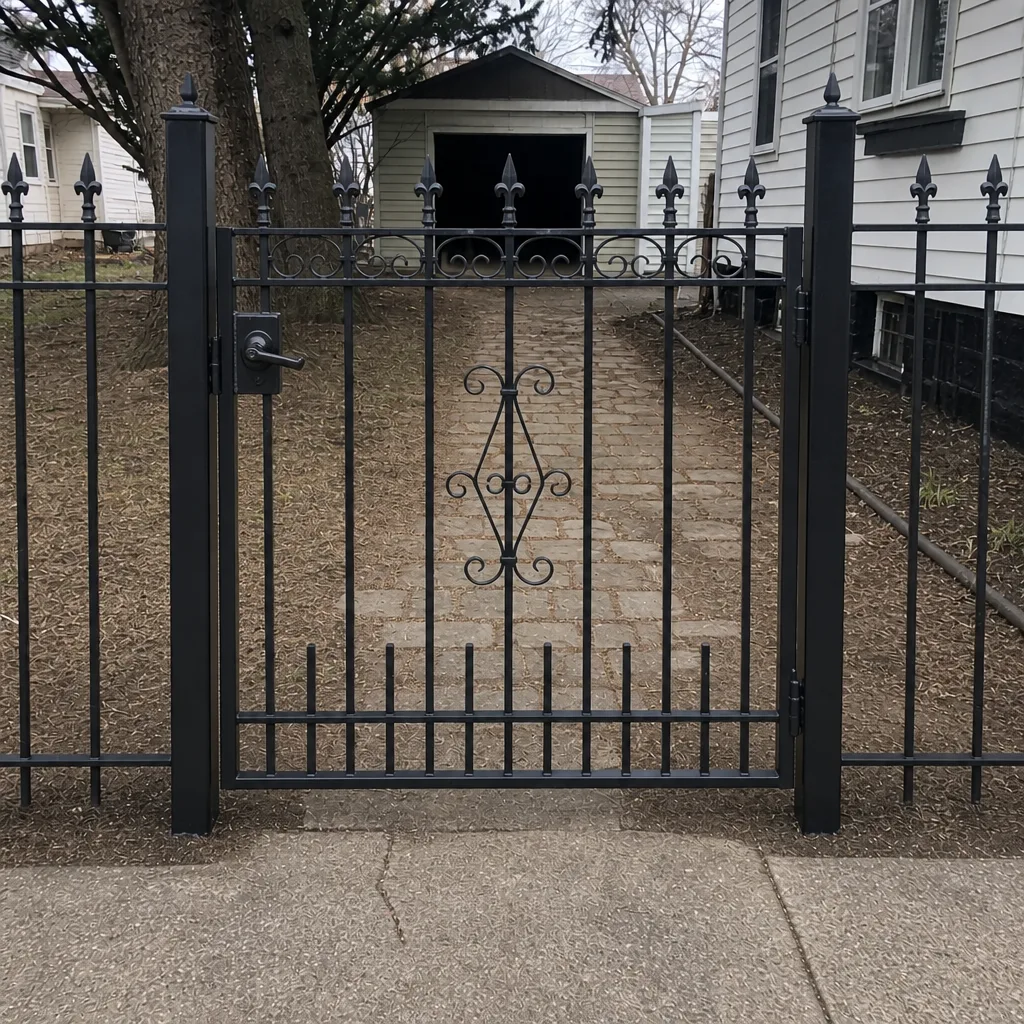 After
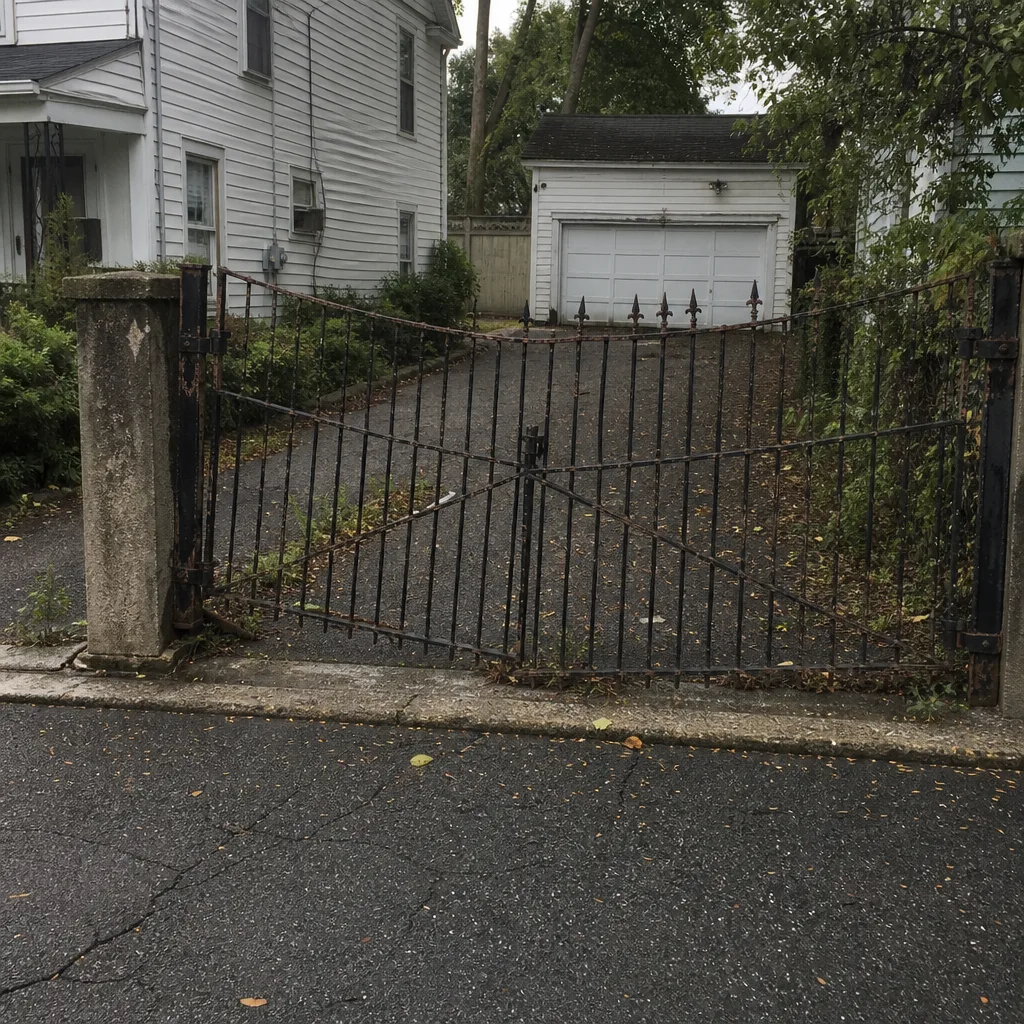 Before
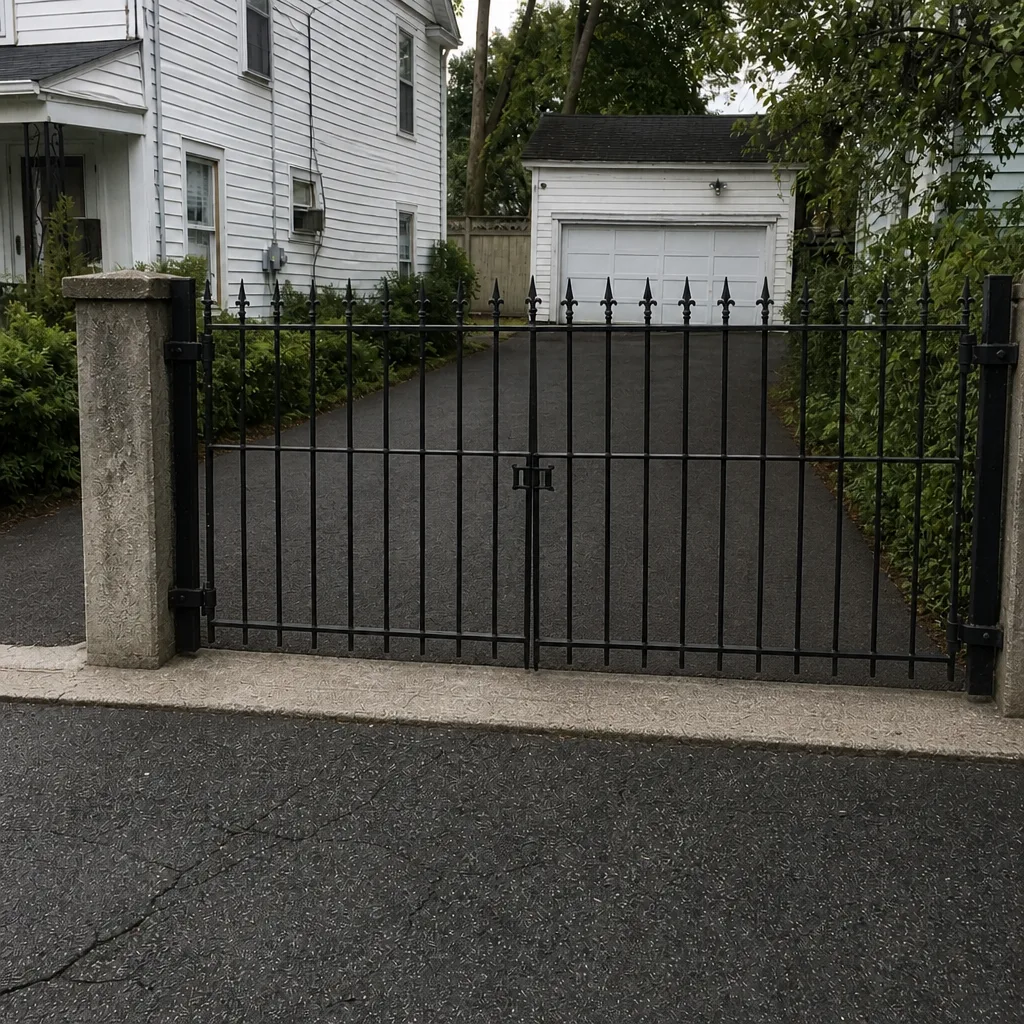 After
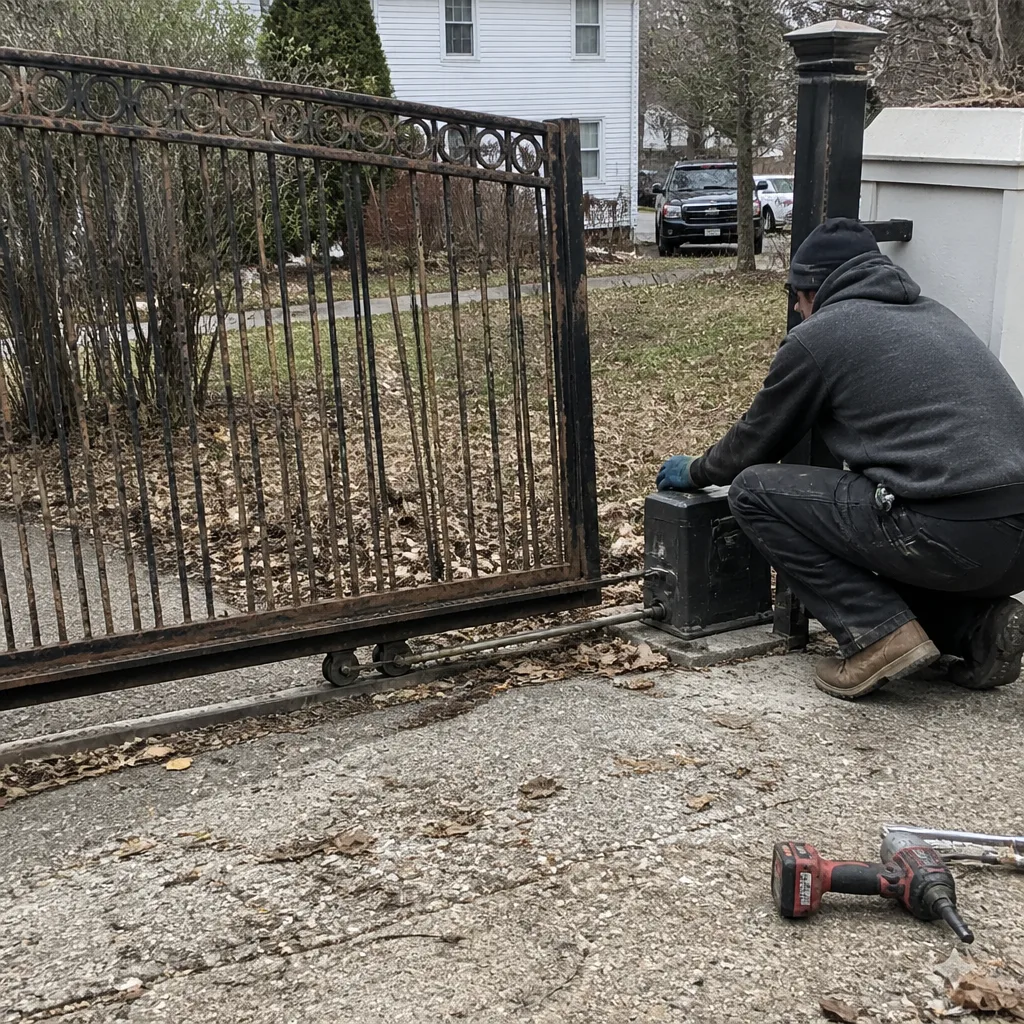 Before
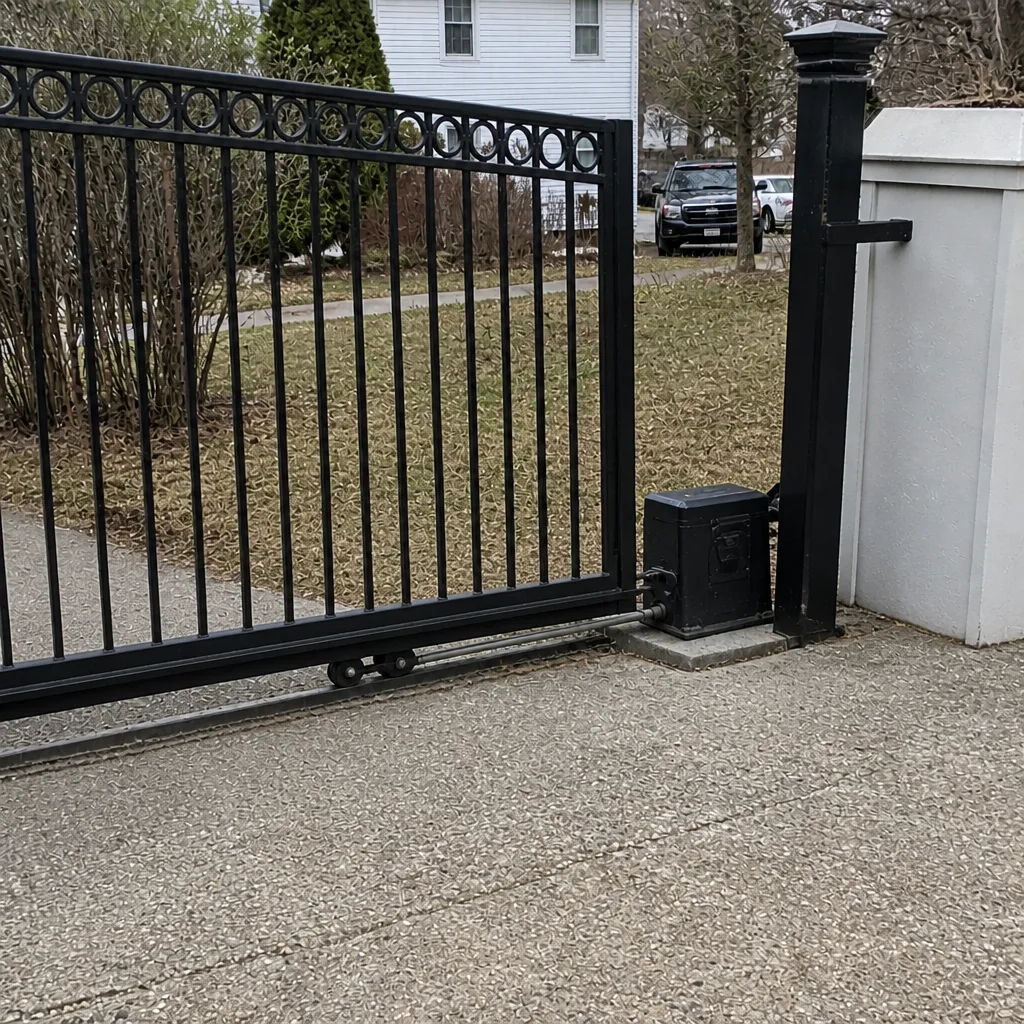 After
When to Call a Professional
Call a technician when the task touches anything with real consequences. That includes any work on the operator’s force, speed, or reversal settings. Any change to the wiring, the transformer, or the power run to the gate. Any work on safety sensors, photo-eyes, or loop detectors. Any diagnosis of a control board fault. Any panel lifting or track reset on a slide gate. Any structural repair to a bent frame or a sagging hinge. And any fault you can’t cleanly narrow to “mechanical or electronic” after the two checks above.
If a gate is stuck open or stuck closed and blocking access, that’s the kind of problem a technician can usually fix in a single visit if the part is available. Gate Repair Albany offers free estimates in Albany. Call (866) 942-6084. We answer 24/7. Fast dispatch from 7am to 7pm, Sunday through Friday.
Frequently Asked Questions
No. Force settings determine how hard the operator pushes and how it decides to reverse, which sits inside the UL 325 safety standard for automatic gates. Changing them without proper diagnostic equipment can leave the gate unable to stop when something is in its path. The right fix when a gate drags is almost always mechanical, not a force adjustment. Call (866) 942-6084 for an exact quote. Estimates are free.
You physically can, but it’s rarely the right move. A control board failure is usually a symptom of something upstream: a failed sensor, a broken wire, or a power issue. Replacing the board without finding the underlying fault leads to a second failed board. That said, if the board is genuinely the fault, we diagnose and replace it on the first visit. Call us for a free estimate.
Freeze-thaw cycles are the main cause. Moisture trapped in hinges, weld joints, and gate-post footings expands and contracts with the temperature swings, working the hardware loose and stiffening the moving parts. Debris and leaves freezing in the track or under a swing gate make it worse. The fix is to free the mechanical bind, not to push the operator harder. Call us before the next cold snap and we’ll check the gate’s clearance and the operator’s settings.
Two quick checks tell you. First, does the operator beep, click, or flash when commanded? If yes, the electronics are at least partially alive. Second, does the gate move freely by hand when the operator is in manual release mode? If yes, the mechanical side is fine and the fault is electronic. If it drags, the mechanical side is the problem. When the checks don’t give a clean answer, that’s when to call.
No. Gate arms and panels are under tension, and bending one back creates a hairline crack that propagates with every cycle. That turns a cosmetic problem into a structural failure within months. Have a technician evaluate the arm; a bent arm is often cheaper to replace than to keep re-straightening. Call (866) 942-6084. Estimates are free.
Yes. We’re experienced with LiftMaster, FAAC, BFT, Linear, Viking, Ghost Controls, DoorKing, Elite, and Mighty Mule operators, covering virtually every residential and commercial unit an Albany homeowner or property manager is likely to have. We fix what you already own rather than pushing a replacement or a brand switch. Call us for a free estimate on the repair.
The Bottom Line
The DIY-versus-professional question for gate repair isn’t a skill contest. It’s a consequence question. Batteries, remotes, photo-eye cleaning, and visual checks are yours. Force settings, wiring, safety sensors, control-board diagnostics, heavy panel lifting, and slide-track resets are not. Between those two ends are the DIY-with-risk jobs: limit switches, arm replacement, hinge tightening, and lubrication. Those can be done, but the cost of getting them wrong compounds quietly and shows up in the operator’s gearbox or the gate frame months later. Our technicians have up to 12 years of experience on both the mechanical and the electronic side of the gate, and we’re gate-only, so every tool and every part is chosen with one trade in mind. When you’re not sure which list a task belongs on, that’s the moment to call: (866) 942-6084. We answer 24/7. Fast dispatch from 7am to 7pm, Sunday through Friday. Estimates are free, and the written estimate is what establishes the final price.
Written by the team at Gate Repair Albany.